
Bitcoin is money. But it’s different from traditional money. Most modern currencies—like the South African Rand—exist because governments declared them into existence. Bitcoin, on the other hand, was not created by any government. It was launched in 2009 as a protocol: a set of rules anyone can choose to follow to transact with others. Bitcoin exists because people voluntarily agree to follow those rules.
Bitcoin is valuable. Value is subjective—based on what people believe and agree upon. Bitcoin gains value because people run the Bitcoin protocol and accept it as payment. Its price is determined by the free market—what buyers and sellers agree it’s worth—not by a central authority. Like gold, its price fluctuates based on supply and demand.
Bitcoin is different. No one controls Bitcoin. No one can force anyone to use a version of the protocol they don’t agree with. Like gold, Bitcoin is scarce—new coins cannot simply be created. Mining Bitcoin takes real energy and time, just like mining gold.
Bitcoin is digital. Unlike gold, it can be sent anywhere in the world almost instantly with a smartphone and internet connection. And even without Internet. Most people use a mobile app called a wallet to store their Bitcoin. A wallet gives you full control over your money. As long as you keep your wallet secure, no one else can access your Bitcoin.
Bitcoin is a protocol. It connects thousands of computers worldwide and defines the rules of Bitcoin as money. One key rule is that there will only ever be 21 million Bitcoin. Each Bitcoin can be divided into 100 million smaller units called satoshis or sats. If you send 100 sats to someone, the protocol ensures you can’t send those same sats to anyone else—just like handing someone a R5 coin.
Bitcoin is transparent. Anyone can inspect the code to see exactly how it works—just like a mechanic can open an engine to see what’s inside. There’s nowhere to hide anything.
Bitcoin is immutable. Bitcoin transactions become harder to reverse the longer they remain in the blockchain. The rules that make this possible can’t be changed unless almost everyone agrees to change them. And because the network is open to anyone, changing the rules is nearly impossible. No company, government, or billionaire can change what Bitcoin is—as long as people are willing to run the protocol they believe in.
Bitcoin is not the only cryptocurrency. Thousands of alternatives (called altcoins, cryptocurrencies, or shitcoins💩) have been created—some well-known ones include Ethereum, Ripple, Cardano, and Solana. But none of them can match Bitcoin’s decentralisation, predictability, and monetary properties. You can safely ignore them.
Bitcoin is decentralised. This means thousands of people run the protocol on their own computers, creating a widely distributed network. The more decentralised the network, the harder it is to change the rules—and the more predictable and trustworthy the money becomes.
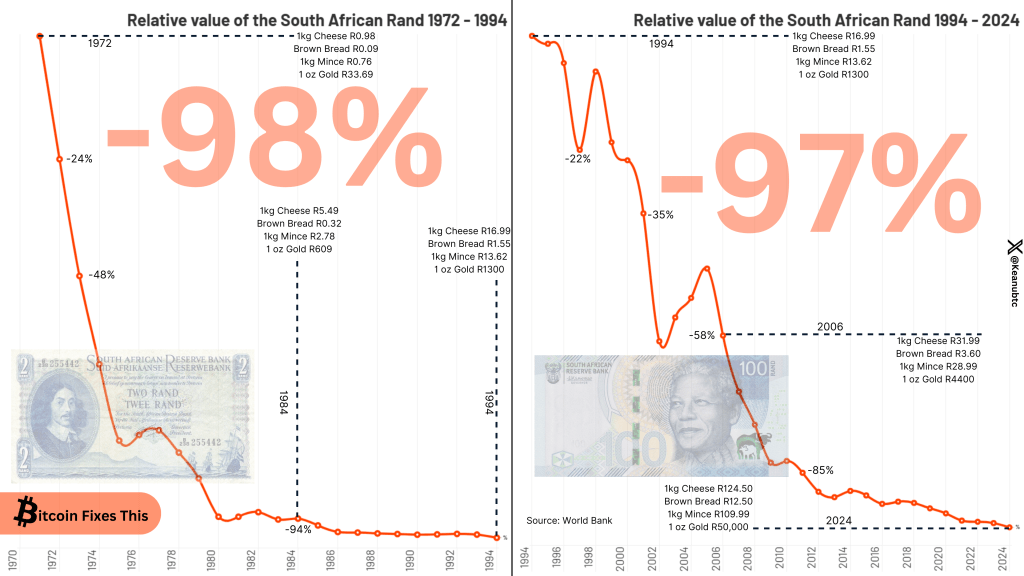
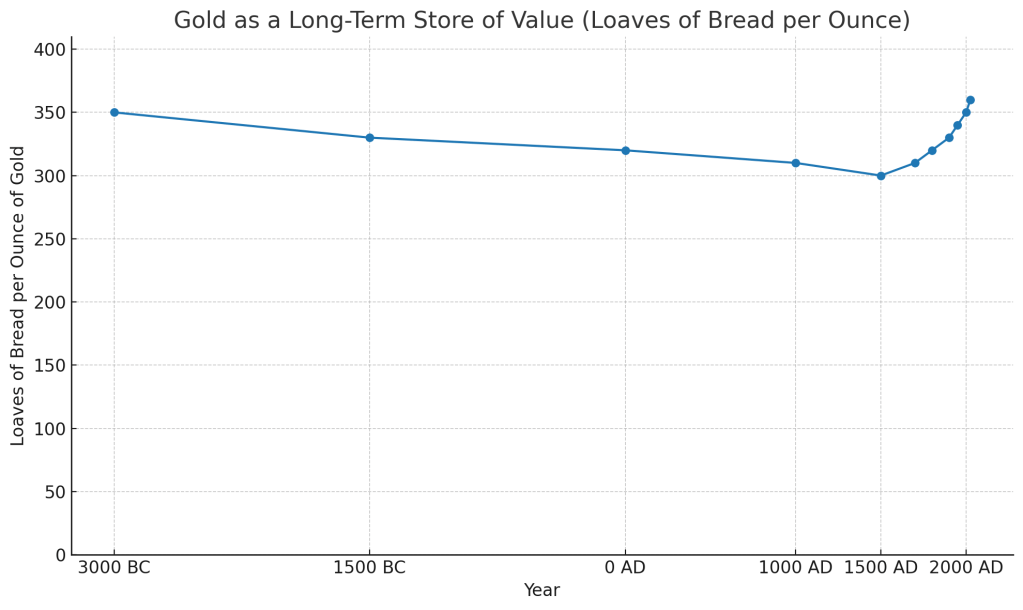
In South Africa (and in many other places) we’ve seen how instability and bad governance can destroy a currency’s value. By contrast, gold has held value for thousands of years because its properties are predictable and unchanging. Bitcoin shares this quality—it will always be Bitcoin. None of the copycats can say the same. That’s why decentralisation matters: it protects Bitcoin’s rules and makes its value reliable over time.
Bitcoin is global. Today, people all over the world use it. Many companies accept Bitcoin, and tools like the Bitrefill app let you buy airtime, data, and shopping vouchers with Bitcoin. For example, in the project shown in this video, our coaches used Bitcoin to send mobile data directly to people’s phones using Bitrefill. That’s only possible because Bitcoin is real money.
But more than that—Bitcoin is better money. Why? Because it isn’t controlled by a small group of people. Zimbabwe is a clear warning of what can happen when money is mismanaged: it can lose all its value. In fact, this is already happening globally. Every year, you need more money to buy the same things. People say prices go up, but really, the value of your money is going down.
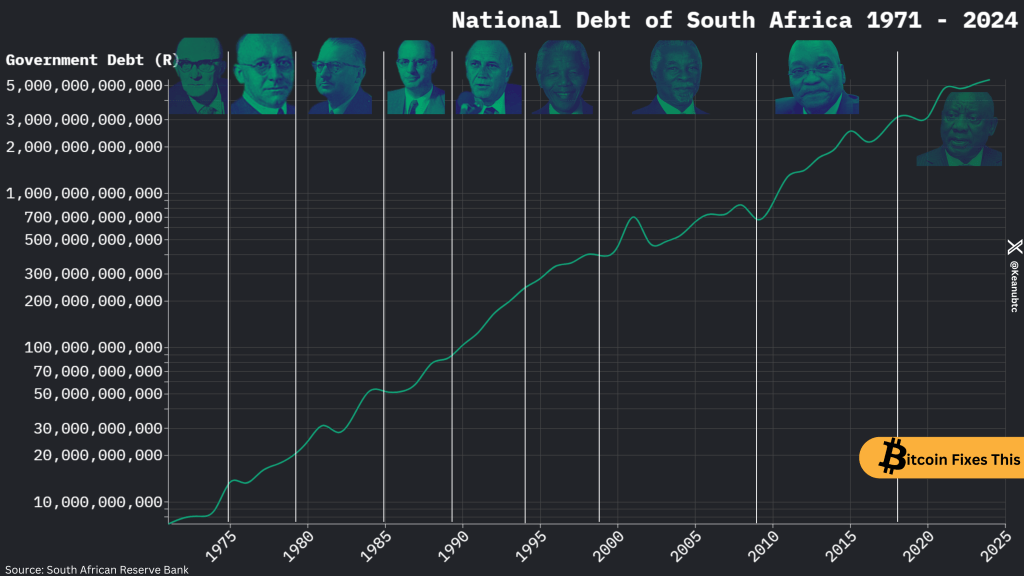
Why does this happen? Because those in charge of the money are doing a bad job.
Using Bitcoin helps protect your earnings from inflation. It can preserve—or even grow—your purchasing power over time. This powerful wealth-protecting technology already exists. It’s up to us to decide whether to use it.
Act now. Your children will thank you later.

 Bitcoin Ekasi