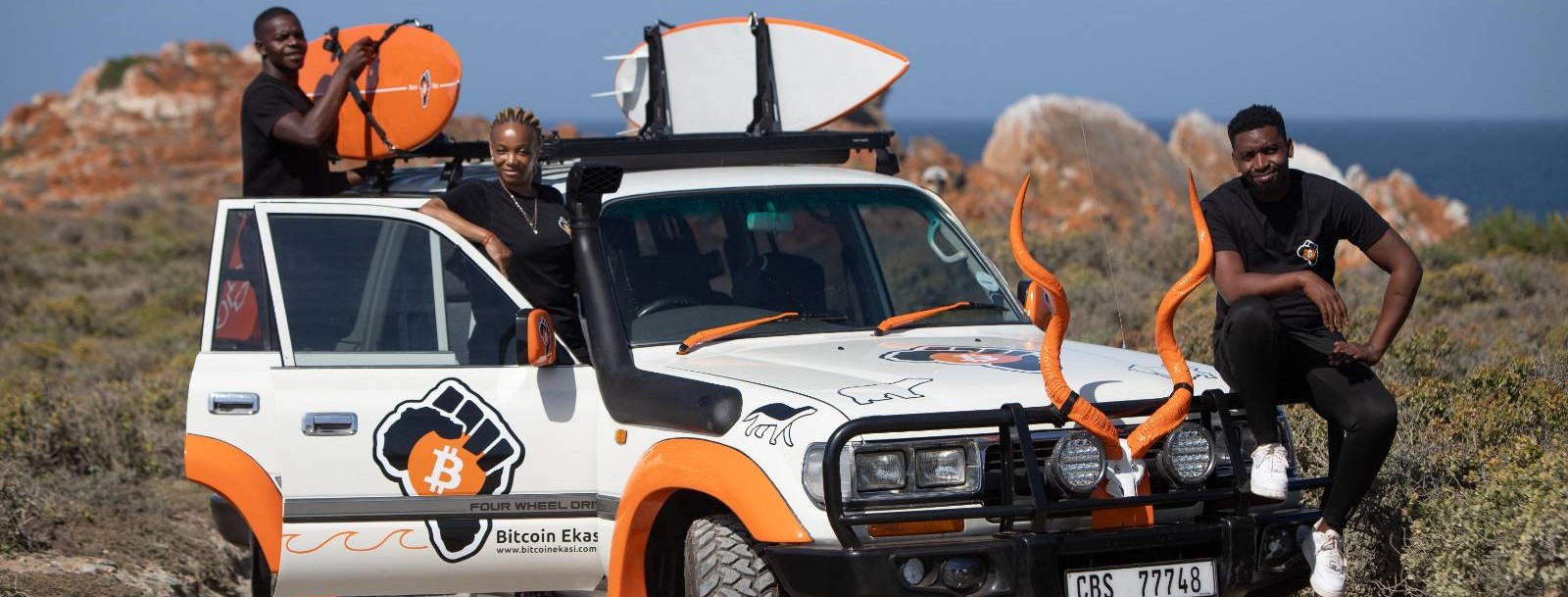
In 2010 Hermann Buhr Vivier and his wife, Jenya Zhivaleva, co-founded The Surfer Kids Non-Profit. In August 2021 they used that NPO as a trusted community platform to launch Bitcoin Ekasi.
‘Ekasi’ is a colloquial South African term derived form the Afrikaans word ‘lokasie’ referring to the vast slums that grew outside South African cities during Apartheid. Unemployment, crime and poverty remain rife there. We believe #Bitcoin can help uplift those who need it most.
Bitcoin Ekasi uses The Surfer Kids as a trusted community platform, as a way to get sats flowing in the local economy.
The Surfer Kids is a registered NPO based at Diaz Beach in Mossel Bay, in the Southern Cape of South Africa. The program runs 5 days a week, all year round, from Tuesday to Saturday. There’s 50 kids enrolled in the program. These children are recruited from within some of the poorest townships around Mossel Bay: Isinyoka, Asazane, and Fairview. An area collectively referred to as JCC Camp.
The Surfer Kids employs surf coaches, lifeguards, teachers, and a teacher’s assistant, people working on community support, and other staff. All of whom live in the same township community as the children.
Bitcoin is used as a tool to help foster financial empowerment, starting with salary payments. All staff earn 100% of their salaries in Bitcoin.

The project Founder, Hermann Buhr Vivier, has been closely following developments in the Bitcoin space since late 2013. He first became interested as a result of the banking crisis and subsequent bank bailouts in Cyprus.
In 2019 he came across an interview with Michael Peterson, the founder of Bitcoin Beach. The idea stuck. A lot has obviously happened since then, culminating with Bitcoin becoming legal tender in El Salvador. But the basic idea with which Bitcoin Beach started is what Bitcoin Ekasi attempts to emulate.
The first township spaza shops were on-boarded in August 2021 and simultaneously The Surfer Kids’ coaches started receiving a small portion of their salaries in Bitcoin, which they then spent buying groceries at the spaza shops that were on-boarded.
What is the motivation behind launching a Bitcoin economy, specifically in a South African township?
Bitcoin Beach illustrated that (contrary to most assumptions) lower-income individuals are in-fact interested in saving. The problem, however, is that they generally haven’t had access to an efficient form of savings. Something that can outpace inflation.
And nowhere are the effects of inflation felt more acutely than in communities where people live day-to-day. To beat inflation one must invest. Everyone knows not to save in fiat currency. But what do you invest in if you’ve only got a few dollars per week to spare and no bank account? You obviously can’t buy shares or property.
In El-Zonte, El Salvador, Bitcoin fixed that problem.
Bitcoin is easily accessible. You can access Bitcoin without a traditional bank account. Bitcoin can be divided up into tiny fractions (SATs) and bought in very small amounts. And with the lightning network (Bitcoin’s fast-growing 2nd-layer scaling solution) it’s possible to make payments as small as a few cents, at virtually no cost.

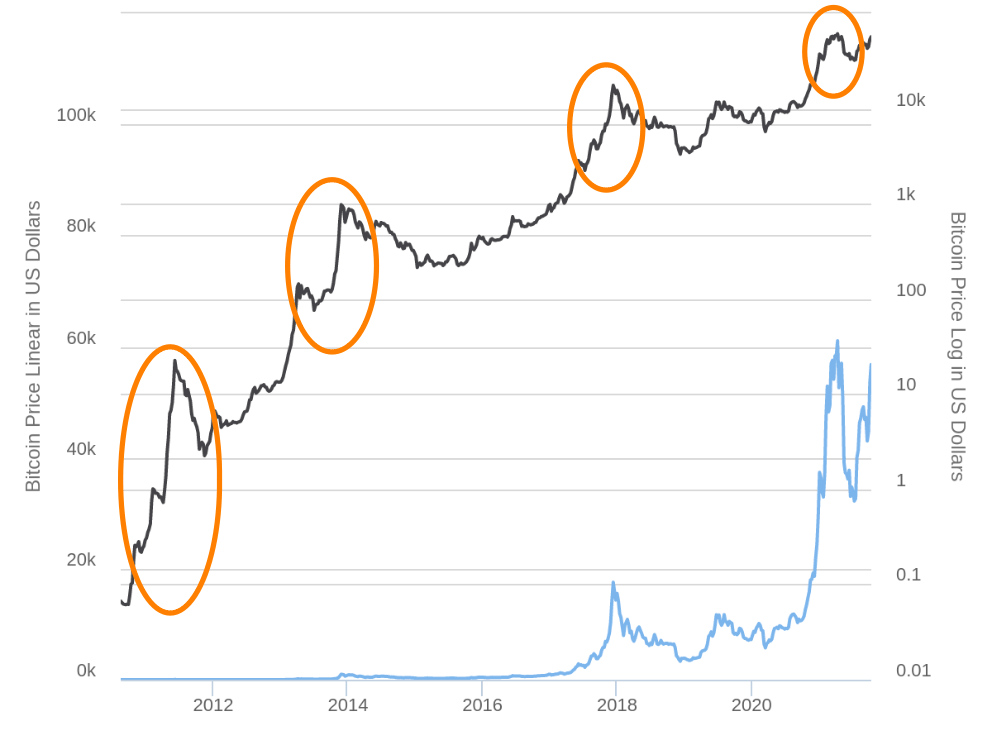
Most importantly, Bitcoin is designed to be anti-inflationary, with a fixed supply, making it far superior to fiat currencies as a long-term savings vehicle. Yes, volatility in Bitcoin is obviously an issue, but only over the shorter term. Long-term it’s always reliably out-paced inflation, and then some.
Plus Bitcoin is in fact becoming less volatile over time with each successive cycle dampening relative to the previous one.
Furthermore, in communities such as the township where we operate, businesses are almost entirely cash based. This presents obvious security issues. Proper management of Bitcoin private keys can, however, largely eliminate this risk.
Bitcoin can provide a very high level of security at a very low cost.
Finally, money is key to survival. Every human being on this planet needs money to survive. Money is what gives us access to all the stuff that meet our basic needs: food, shelter and even water. So the old adage ‘Money is the root of all evil’ should in fact read ‘Corruptible money is the root of all evil’.
Large central banks that manage global reserve currencies like the Euro and the Dollar are able to create vast sums of currency at no cost, essentially exporting their inflation and burdening future unborn generations with unimaginable public debts that can never be repaid.
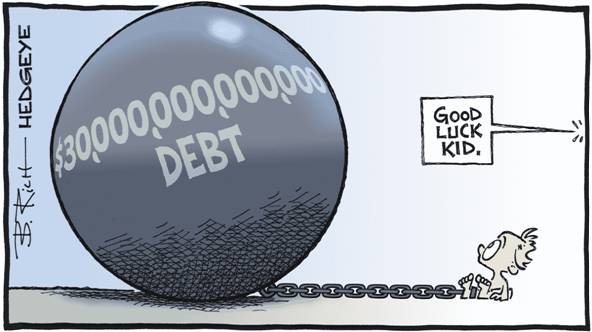
And all this to finance the irresponsible spending behaviours of governments and banks that are too-big-too-fail, yet fail to lend & borrow responsibly.
Bitcoin presents an alternative. A sound, fair, transparent and, most importantly, decentralized system of money that cannot be co-opted to serve the interests of a powerful elite.
Widespread adoption of Bitcoin could alleviate many of the otherwise apparently-unsolvable social ills that plague our societies like wasteful wars and corruption at the highest levels of governments and corporations. Because it holds everyone equally accountable to the same monetary rule-set that enforces responsible financial behaviour.
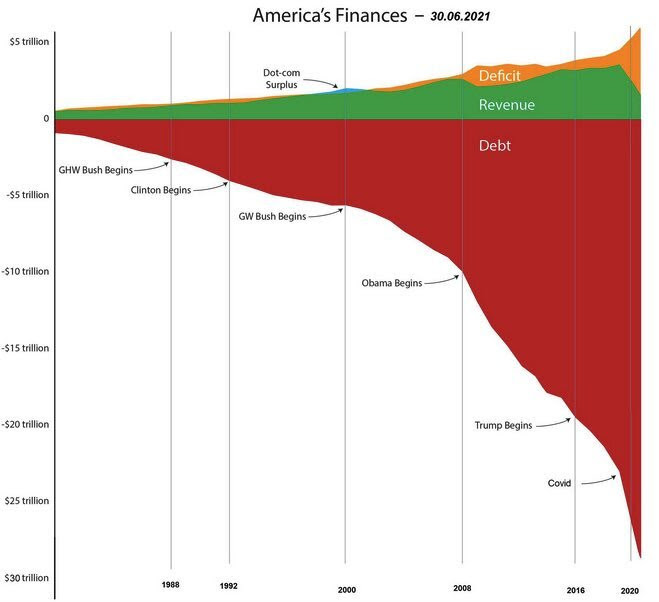
Wherever this ends, it’s unlikely to end well for the majority of people on this planet.
Morality should not be determined by proximity to the money spigot.
Bitcoin Beach illustrated that Bitcoin is not only a speculative asset, or a store of value. It can function as a medium of exchange, bringing it one step closer to a fully fledged and viable alternative global currency. One that is as fair as it is transparent. Open to anyone with a internet connected device.
If Bitcoin Ekasi (and others following the Bitcoin Beach example) proves a success, then it becomes that much more plausible to imagine Bitcoin being adopted as a fair and truly global currency.
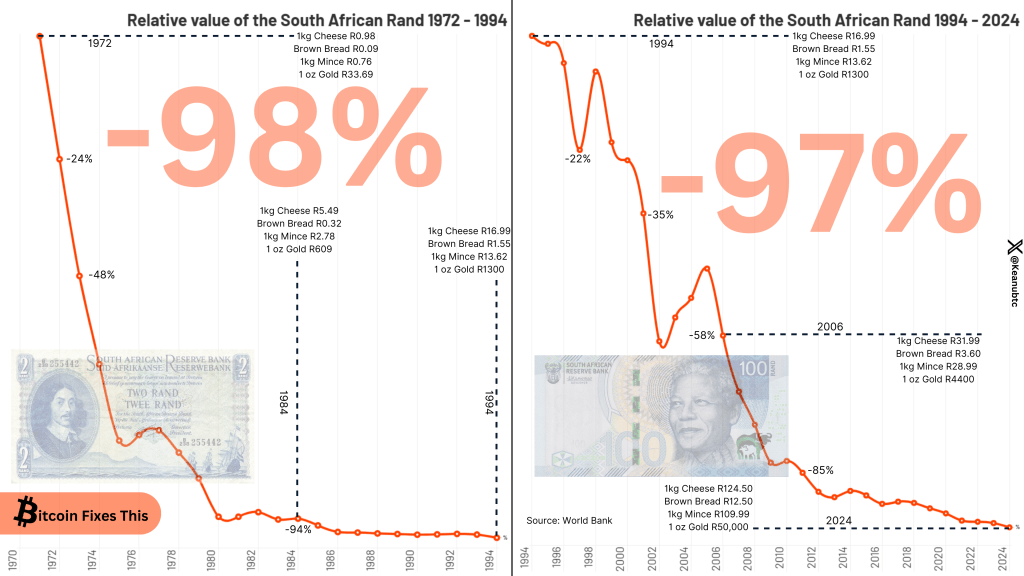
We exist to illustrate the point: Bitcoin is a viable and already functional alternative that can help usher in a better and fairer future for all humankind.
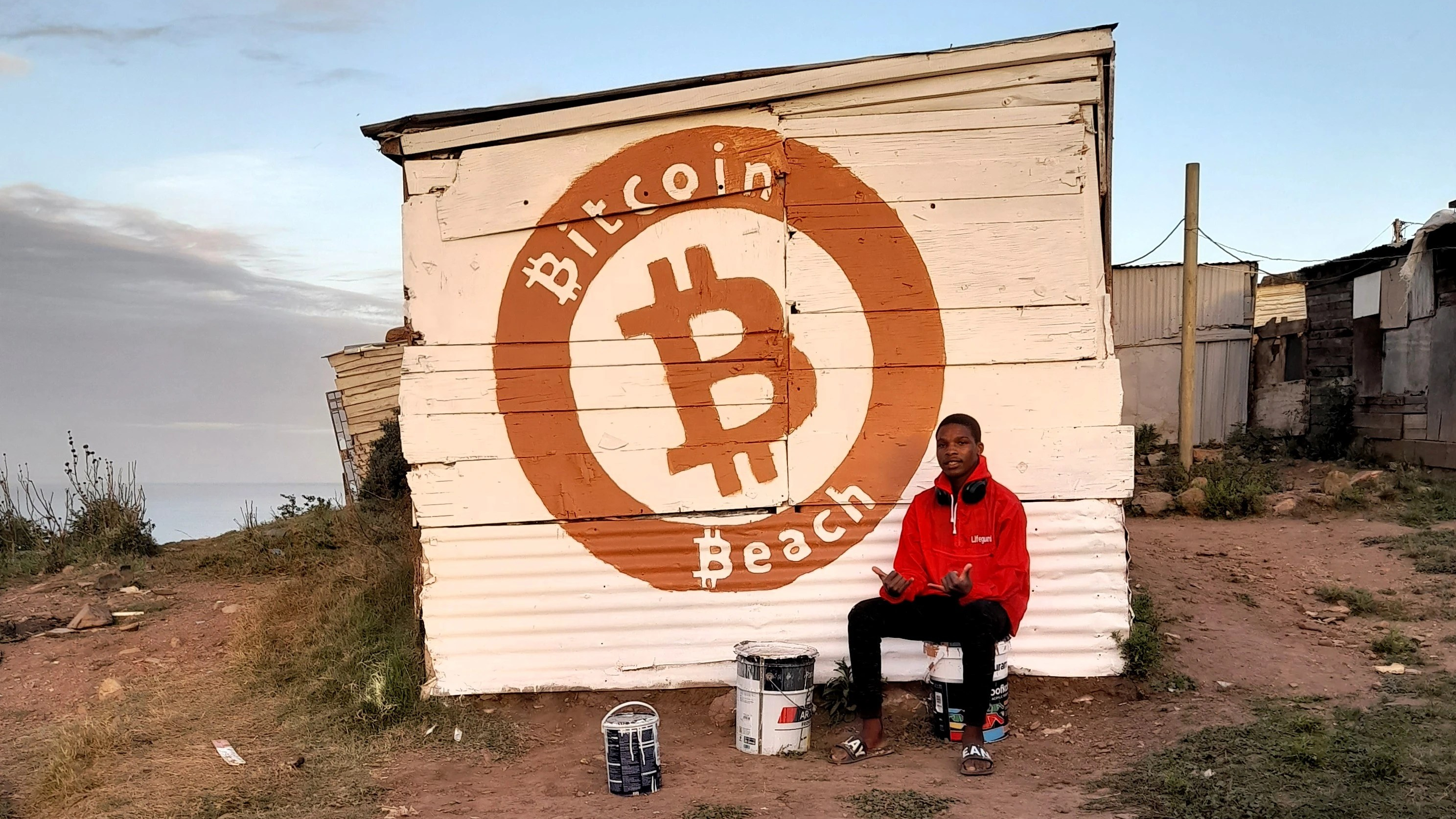
 Bitcoin Ekasi